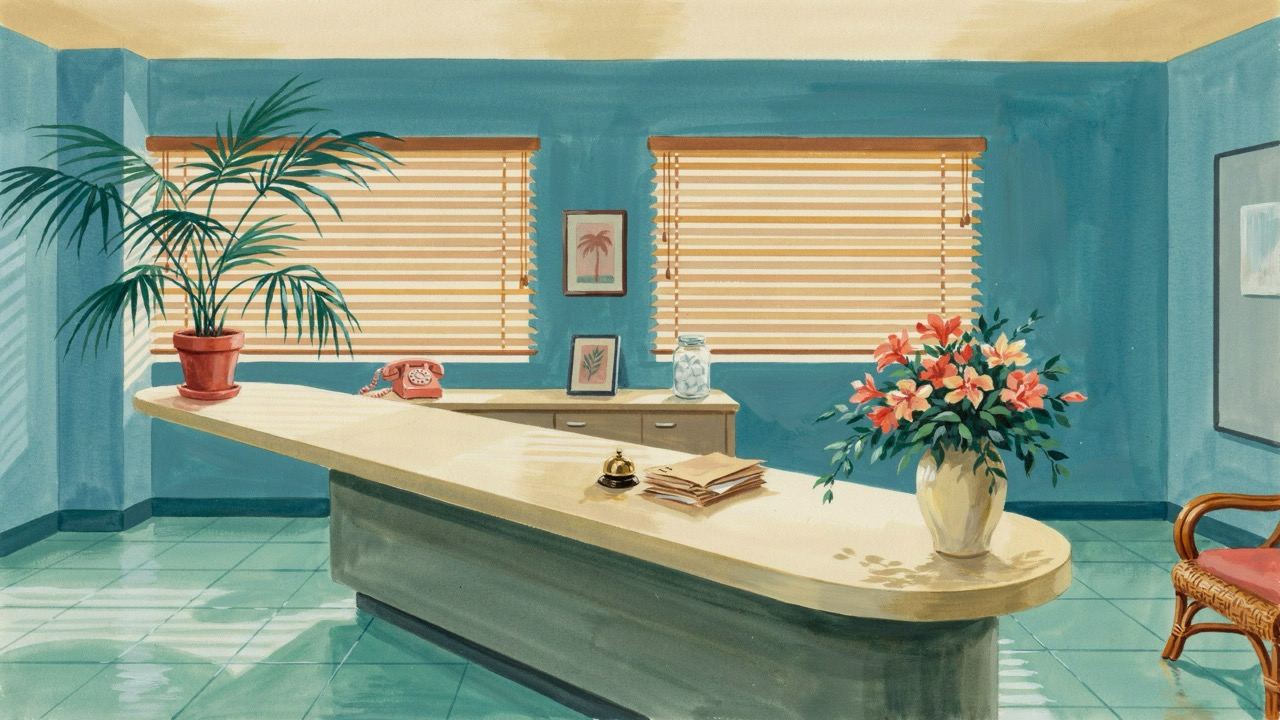
The dining room of the Flamingo Club smelled, as it always did on luncheon days, of gardenias and mild social anxiety. The gardenias came from three enormous arrangements stationed near the windows. The anxiety came from everywhere else.
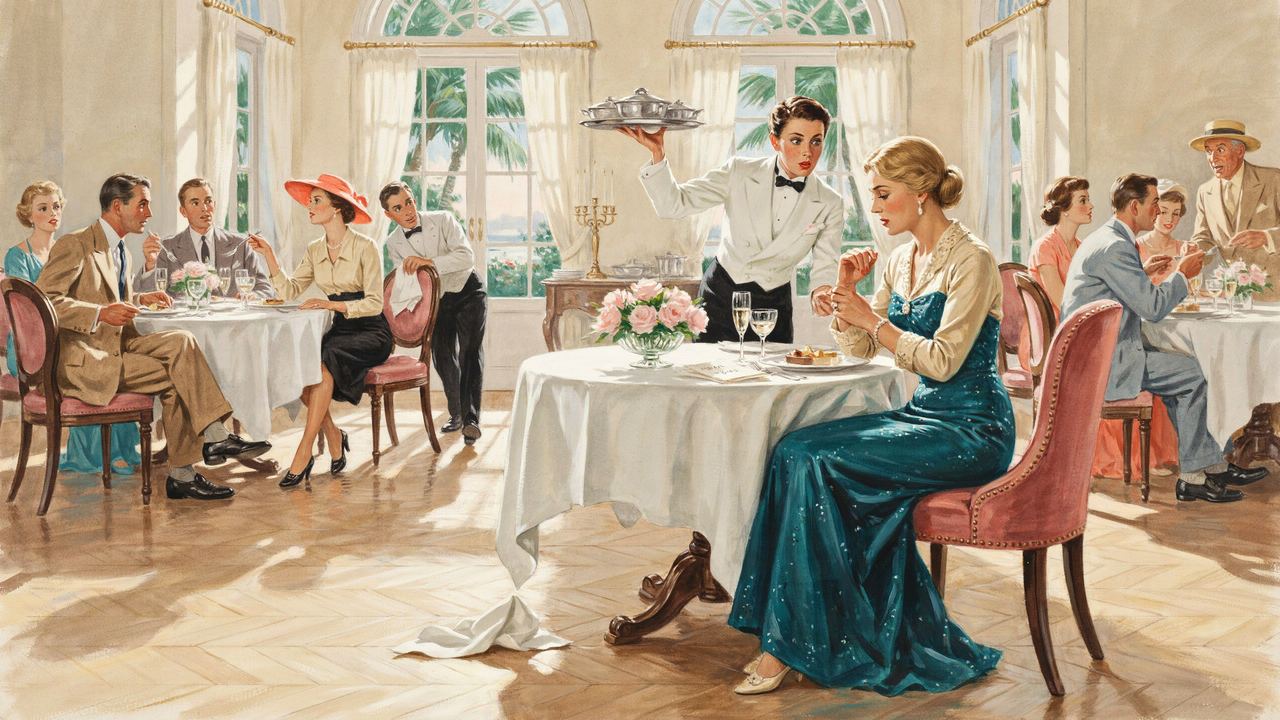
{{RECIPIENT_NAME}} had been a member for eleven years, long enough to know which tables carried status and which carried drafts from the kitchen. {{SHE_CAP}} had requested neither. {{SHE_CAP}} had a table near the east window, a cup of consommé {{SHE}} hadn’t touched yet, and an unobstructed view of practically everything.
The Flamingo Club
{{RECIPIENT_NAME}}
East window
This was, in {{HER_P}} experience, the ideal arrangement.
The Annual Preservation Luncheon existed officially to benefit the Palm Beach Historical Preservation Society, and unofficially to allow sixty-three people to evaluate one another’s jewelry while appearing to care deeply about the Palm Beach Historical Preservation Society. {{RECIPIENT_NAME}} had attended six of them and had long since stopped trying to determine which purpose generated more enthusiasm.
The room was filling. There was Franklin Oates at the far end of the bar, pointing a camera the size of a small terrier at something through the window. Franklin had made his fortune in commercial real estate and had subsequently decided that birds were more interesting than commercial real estate, a conclusion that was, {{RECIPIENT_NAME}} thought, almost certainly correct. There was Gerald Whitmore near the entrance, greeting each arriving guest by name with the warm efficiency of a man who had made a career of remembering donors and had, somewhere along the way, quietly let go of everything else. His own children’s birthdays, for instance. His wedding anniversary. The general concept of dinner.
And there, at the center of the room, which was where Victoria Amarante Carrington always was, was Victoria.
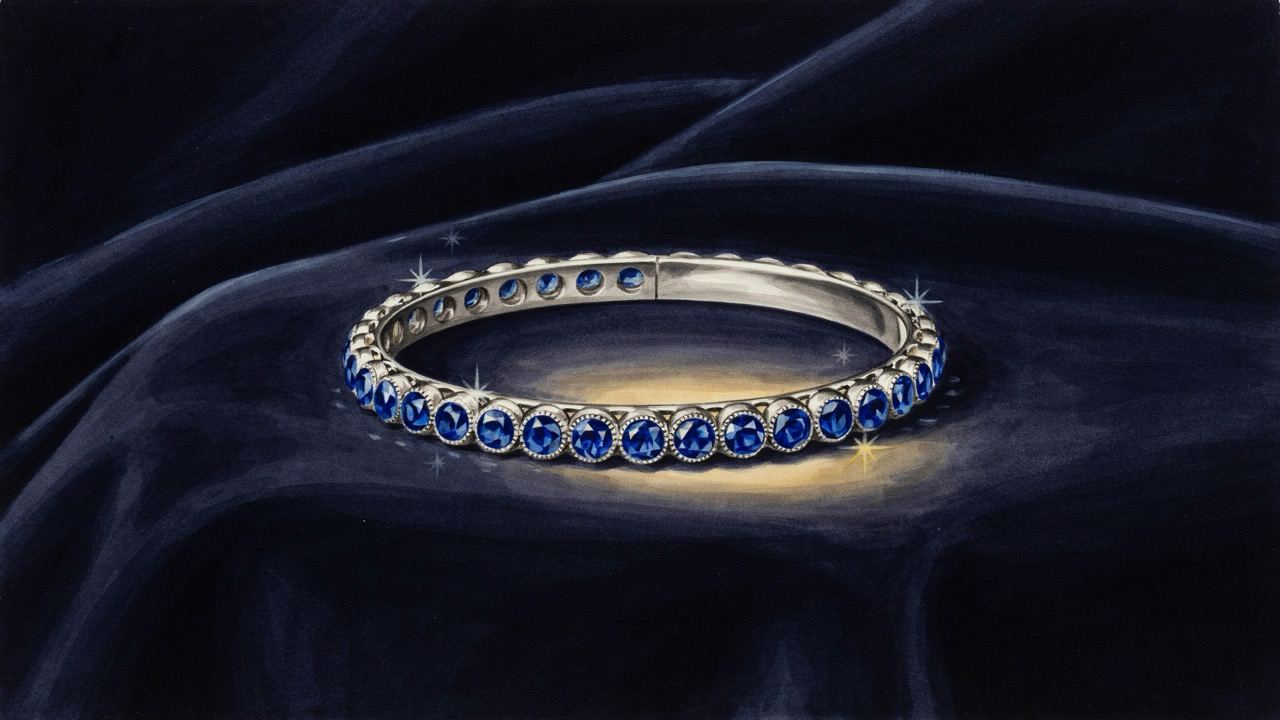
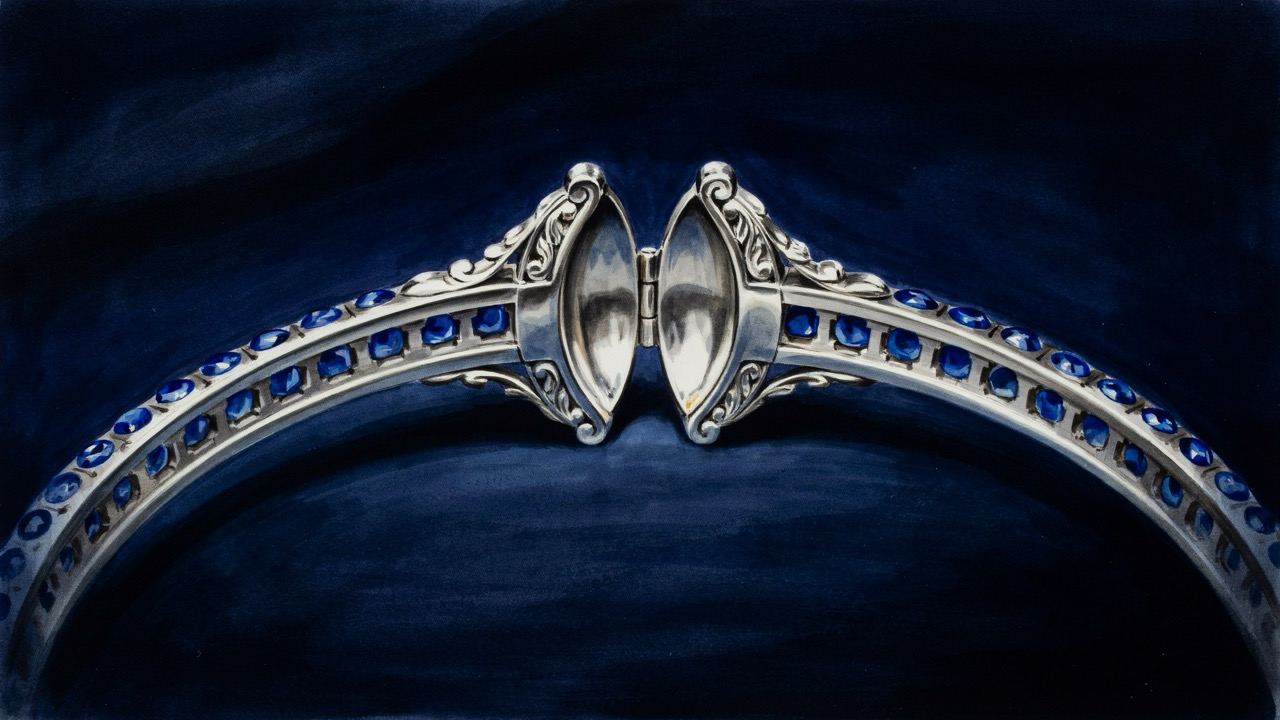
Victoria did not simply stand in rooms. Victoria occupied them, the way weather systems occupied coastlines: with advance notice, a certain grandeur, and the unspoken understanding that everyone else would adjust. She was gesturing with her left hand, the wide platinum cuff catching the light with every movement.
The bracelet.
The Amarante Collection had been profiled in two magazines, featured in three charity catalogs, and discussed at approximately every dinner party {{RECIPIENT_NAME}} had attended in the past decade. The collection had descended, according to Victoria, from a branch of Austrian nobility, traveling across two European wars, a shipping container somewhere outside Jacksonville, and finally to a climate-controlled display case in a house on South Ocean Boulevard that Victoria referred to as “the cottage.” The cottage had fourteen rooms. The climate control was dedicated solely to the jewelry.
The collection had become, over the years, less a set of objects than a kind of civic mythology. It appeared in charity catalogs the way certain families appeared in society columns, as though its presence confirmed the event was serious. Docents at three different fundraisers had referenced it without being asked. A profile in a magazine of moderate national circulation had described Victoria as its “custodian,” a word she had not chosen but had not corrected.
The Island RegisterSociety
The Custodian
Victoria Amarante Carrington and the bracelet the whole island talks about
The Amarante Collection, platinum and sapphires, said to descend from Austrian nobility.
Few pieces in Palm Beach carry a story like the Amarante Collection, and fewer still have a custodian as devoted as Mrs. Carrington, who has worn it to every Preservation Luncheon for as long as anyone can remember.
The bracelet itself was a wide cuff of platinum and sapphires, Victorian in style, with a clasp of considerable intricacy. It had been repaired recently. {{RECIPIENT_NAME}} knew this because {{SHE}} had overheard Victoria mentioning it to at least four people before the soup course.
“Reinhold handled it personally,” Victoria was saying. “He is the only person I would trust. The clasp had the smallest catch. You would never notice it. But I noticed.”
Reinhold Pfeiffer ran the most respected jewelry atelier in Palm Beach. His shop was on Worth Avenue, between a gallery that sold abstract art to people who didn’t like abstract art and a clothing boutique whose window display had not changed since the previous administration. His discretion was considered legendary. His prices were, according to the people who had paid them, clarifying.
{{RECIPIENT_NAME}} sipped {{HER_P}} consommé and decided it had been worth the wait.
{{SHE_CAP}} had been considering a second cup when a woman sat down uninvited at {{HER_P}} table.
Her name was Paulette Marsh. She was seventy-something, thin in the manner of someone who had once been slender and had decided that slender was no longer sufficient, and she was wearing an expression of refined, barely contained indignation that {{RECIPIENT_NAME}} suspected was simply her face at rest.
“You know what they’ve done,” Paulette said, by way of greeting.
“Tell me,” {{RECIPIENT_NAME}} said.
“The table assignments. I have been seated next to Harriet Fullerton for the fourth consecutive year. Fourth. I have run the numbers.” She set down her water glass with a precision that suggested it had been used, at some point in her imagination, for something else. “Harriet Fullerton chews. Not briefly. Continuously. Like a very well-dressed ruminant.”
“Have you spoken to Gerald about it?”
“Gerald told me he’d look into it. He said this in 2022 and he said it again just now, with identical warmth and identical vacancy. That man remembers every dollar but he cannot retain a seating complaint for longer than forty seconds.”
“He has no compartments,” Paulette said. “He has one very large room and it is full of pledge cards.” She stood, having accomplished what she came to accomplish. “Enjoy your consommé. It’s quite good this year.”
She moved off. {{RECIPIENT_NAME}} watched Harriet Fullerton at the adjacent table, already eating a bread roll with a thoroughness that suggested Paulette’s assessment was not entirely unfair.
❦
Across the room, you notice two things at once. Which catches your eye first?
II. Before the Plates Are Cleared
Chapter 2 of 6
The luncheon proceeded in courses, with speeches between them and a background hum of strategic conversation that rose and fell with the wine.
Gerald Whitmore gave remarks about the historical society’s most recent project, a restoration effort involving a building on Flagler that had once been a hotel and was now in a condition that Gerald described as “romantic potential” and that the Palm Beach County fire inspector had described, in a written report, as seventeen specific violations.
The Flamingo Club
The Annual Preservation Luncheon
Consommé
RemarksGerald Whitmore, on the Flagler restoration
Snapper with lemon butter
Key lime pieand coffee
❦
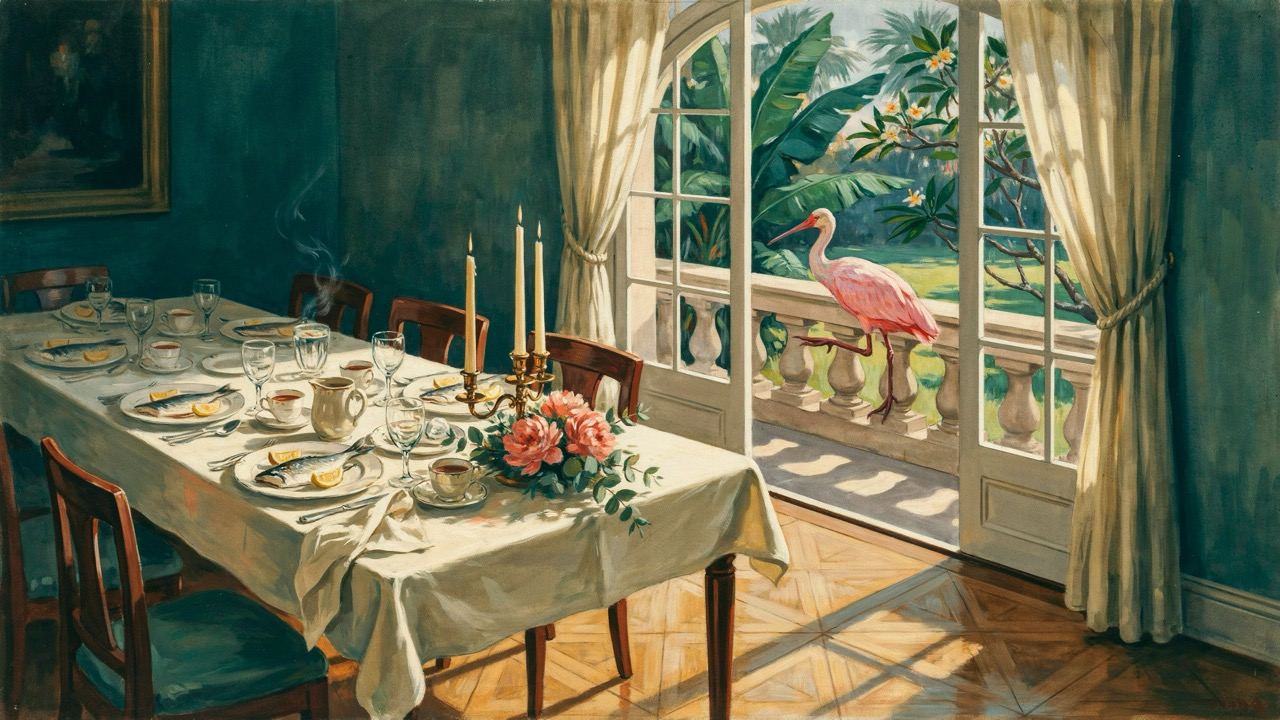
Franklin Oates excused himself during the fish course to photograph what appeared, from a distance, to be a shorebird on the terrace railing. He returned fifteen minutes later with the satisfied air of a man who had accomplished the primary purpose of his afternoon. “Roseate spoonbill,” he said to no one in particular. “Third one this week. Entirely anomalous for the season.”
At the center table, Victoria was in excellent form. She told the story of the bracelet’s repair with the narrative precision of someone who had told it several times and improved it with each telling. Reinhold had personally adjusted the clasp mechanism. He had called it the finest example of Victorian-era jewelry construction he had encountered in thirty years of practice. The clasp alone had taken two days.
{{RECIPIENT_NAME}}, close enough to hear this, noted that Reinhold, two tables away, had gone very still when Victoria began the story. He took a deliberate sip of water. He set the glass down with great care. He did not look at Victoria. He looked at his bread plate.
❦
The woman at the adjacent table ordered a second Aperol spritz in a coffee mug. It was a nice mug. Heavy ceramic, the kind that held heat well.
“My therapist says I’m allowed to drink at social functions,” the woman said. Her name tag said Diane. “As long as I use a container that feels grounding.”
“The mug does look grounding,” {{RECIPIENT_NAME}} agreed.
“It’s from a retreat in Sedona. Apparently the clay is from a specific canyon. I have three of them. I keep one in the car.”
“For driving?”
“For parking,” Diane said, as though this were obvious. “Parking garages are very hard for me. I have a note from my doctor, actually, but the Esplanade doesn’t honor it.”
{{RECIPIENT_NAME}} thought about asking a follow-up question and decided that some conversational threads were best appreciated for their texture rather than their content. {{SHE_CAP}} turned back to the room.
❦
Something catches your eye. Where do you look?
The fish course was cleared. A woman named Patricia said she had always found the Amarante Collection “almost overwhelmingly beautiful,” which was, {{RECIPIENT_NAME}} thought, a lot of feeling to have about someone else’s jewelry. Victoria received three more compliments about the bracelet before dessert was announced.
❦
Before the dessert course arrives, you have a moment. Where do you go?
III. The Bracelet Disappears
Chapter 3 of 6
It happened between the fish course and the dessert.
Victoria’s voice cut through the dining room with a clarity that silenced every conversation in approximately three seconds.
“It’s gone.”
{{RECIPIENT_NAME}} set down {{HER_P}} fork.
Victoria was standing at her table, holding her left wrist with her right hand, looking at the bare space below it with the expression of someone watching a disaster unfold in a medium she had not previously considered dangerous. Edward was on his feet. Gerald Whitmore had already crossed the room with the efficiency of a man who had been moving toward distress for forty years and had gotten very fast at it. Constance Fairweather, from across the room, lifted her head with an expression of concern that was, {{RECIPIENT_NAME}} thought, quite convincing.
“I had it at the fish course. I know I had it because I gestured and it caught the light and Miriam commented.” She looked at Miriam. Miriam nodded vigorously. “I had it, and now it is gone.”
Nobody left the room. No announcement had been made. Nobody had been asked to stay. But not a single person moved toward the exit. Sixty-three people discovered, in the same moment, that they were all very interested in what had happened to Victoria Amarante Carrington’s bracelet. A woman who had been trying to leave for twenty minutes to retrieve her car from a parking structure she found stressful sat back down without apparent hesitation.
Human nature was, {{RECIPIENT_NAME}} thought, a remarkable and fairly consistent thing.
Gerald Whitmore organized the room with warm authority and a clipboard that appeared, as if from instinct, from somewhere inside his jacket. He did not announce it as a search. He called it “just having a look around together.” Gerald had been doing this for a long time. He was very good at it.
Victoria sat down. Edward sat beside her and took her hand, which was either the act of a devoted husband or a practiced one. From where {{RECIPIENT_NAME}} was sitting, it looked like both.
Reinhold Pfeiffer had not moved from his place near the window. He was looking at his own hands.
❦
The room has reorganized itself around the crisis. Where does your attention go?
IV. What the Clasp Knows
Chapter 4 of 6
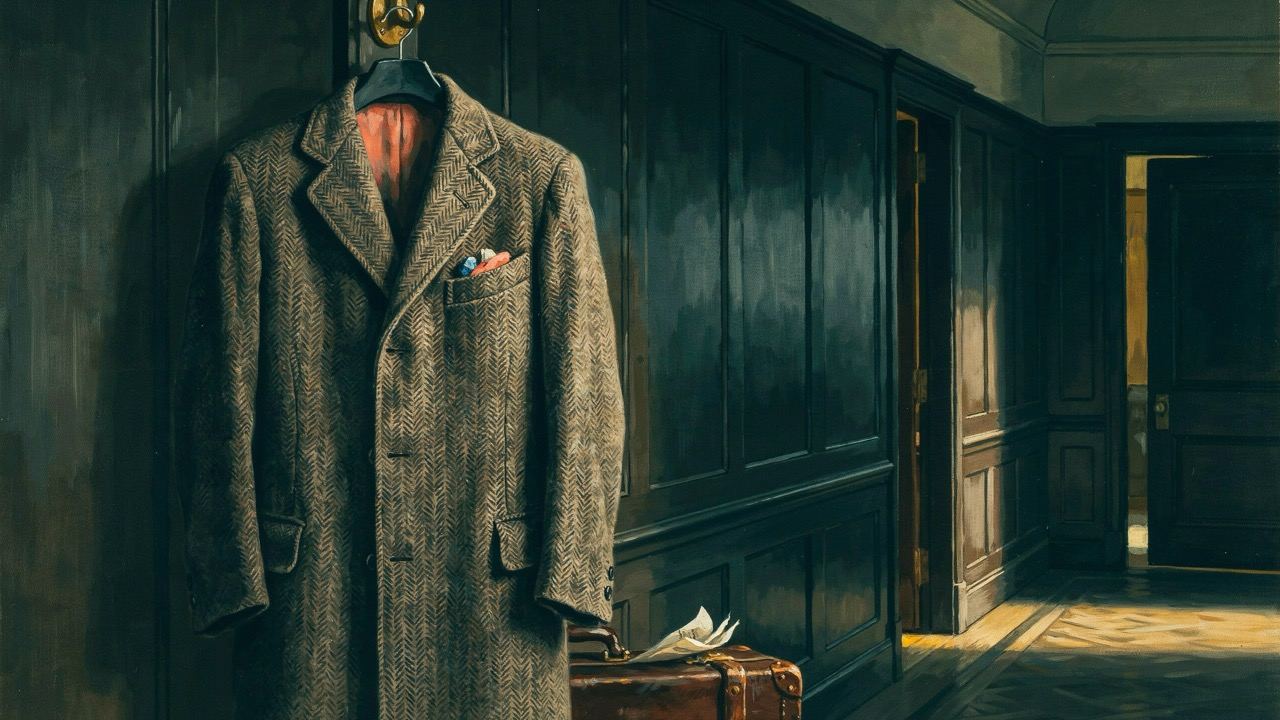
The bracelet turned up at twenty past two, in the right-hand pocket of Reinhold Pfeiffer’s coat.
This was not discovered dramatically. It was discovered practically, by Gerald Whitmore, who had been conducting his search with the organized warmth of a man who had once raised forty thousand dollars at a silent auction by personally escorting seventeen reluctant bidders to the bid sheets, and who genuinely believed that all problems yielded to cheerful persistence. He had checked every bag, every coat, and the floor beneath six tables, with the friendly permission of everyone, because Gerald asked in a tone that made refusal feel vaguely uncharitable.
Reinhold’s coat was hanging near the service corridor. Gerald brought it to the room in his hand, not triumphantly, he was not a triumphant man, but with the careful neutrality of someone who understood that what he was carrying was going to cause something.
Reinhold had gone very still.
“I can explain,” he said.
Victoria looked at her bracelet. Her expression moved through several territories in rapid succession: relief, then something harder, then something {{RECIPIENT_NAME}} could not yet name.
“I think,” {{RECIPIENT_NAME}} said, from near the east window, “that what you need to explain is the inscription.”
The room went quiet. Reinhold looked at {{HER}}. He seemed, {{RECIPIENT_NAME}} thought, faintly relieved. The look of a man who has been carrying something at an angle for several hours and has been offered, at last, a place to set it down properly.
“When I opened the clasp for the repair,” he said, “I found an inscription on the interior surface. Very small. Engraved at manufacture.”
“I should have come to you,” Reinhold said, to {{HER}} directly. “I know that. Instead I panicked. If it became known that I had authenticated this piece, twice, without ever opening the clasp fully, without ever seeing what was inside it…” He set his hands flat on the table. “Forty years.”
“What does the inscription say,” Victoria said. It was not quite a question.
Reinhold picked up the bracelet. He opened the clasp. For a moment he simply looked at what was engraved there. Then he read it aloud.
Congratulations Dorothy. Twenty Wonderful Years.
Sunshine Dental Associates. South County Road Office. 1987.
The silence that followed lasted four seconds.
Nobody moved. Sixty-three people who had been, moments ago, deeply interested in a missing bracelet were now deeply interested in something else entirely. The room had the quality of a held breath, the specific stillness of people who have just understood something and are waiting to see who will speak first. For the first time in perhaps twenty years, every story Victoria Amarante Carrington had ever told about the collection was, simultaneously, in question.
In Palm Beach social terms, four seconds of silence is somewhere between a very long pause and the end of something.
V. Dorothy
Chapter 5 of 6
Several things happened at once.
Constance Fairweather made a sound she immediately converted into a cough.
Franklin Oates, who had returned from the terrace and missed the entirety of the preceding forty-five minutes, looked up from his camera and said, “Has something happened?”
Paulette Marsh, at her table, set down her fork. Her expression, for the first time all afternoon, had lost its quality of refined indignation. It had been replaced by something that looked, if {{RECIPIENT_NAME}} was reading it correctly, remarkably like delight.
Diane took a long contemplative sip from her grounding mug.
And Victoria sat down.
Edward crossed to her immediately and put his hand on hers. {{RECIPIENT_NAME}} had been watching Edward Carrington for an hour and a half, and {{SHE}} felt fairly certain this was simply a decent man caring for his wife.
“Well,” said Gerald Whitmore, with the gentle, slightly baffled warmth of a man who had been present for a great deal of human experience and was always somewhat surprised by it anyway. “History is complicated.”
❦
The room is quiet and processing. You have one more move. What do you do?
❦
It was Gerald Whitmore who said it first. He was standing near the display table, holding a glass of water he had poured for no reason. “Does anybody know what happened to Dorothy?”
Sixty-three heads turned.
“Dorothy from Sunshine Dental Associates,” Gerald clarified. “Twenty years. That’s a real tenure. Where did she end up?”
Constance said: “I had a dentist on South County for years. Retired sometime around 2001. What was the practice called?” Franklin Oates set down his camera, which had not happened voluntarily at a social event in recent memory. “My mother’s dentist was near the bridge. Late eighties.”
Within four minutes, five phones were out. Gerald had found his notepad. He was writing things down with the expression he reserved for major donor information. Dorothy, apparently, had made the list.
Prospects
Oates, ask re: birds
DOROTHY
Sunshine Dental
S. County Rd, 1987
20 yrs. FIND HER!!
This was, {{RECIPIENT_NAME}} reflected, the most organized and genuinely engaged the Flamingo Club had been at a preservation luncheon in at least three years, and it had nothing to do with preservation. It had to do with Dorothy, who had worked somewhere for twenty years and had earned a wide platinum and sapphire cuff for it, and who had no idea that her twenty-year gift had subsequently acquired a history involving Austrian nobility, two magazine profiles, and a climate-controlled cottage on South Ocean Boulevard.
{{RECIPIENT_NAME}} thought Dorothy might find the whole thing very funny. {{SHE_CAP}} hoped so.
❦
Victoria held the bracelet for a long time before she put it back on. When she did, she did it herself, without asking Edward, with the same deliberateness with which she had presumably put it on every morning. The clasp caught. It held.
She looked at it on her wrist. For just a moment, before she looked up, her eyes found {{RECIPIENT_NAME}}’s across the room. Then she looked at the room.
“The bracelet is exactly what it always was,” she said. “The story just got more interesting.”
Nobody disagreed.
It was, {{RECIPIENT_NAME}} thought, either the most graceful thing {{SHE}} had ever witnessed or the most practiced. {{SHE_CAP}} genuinely could not tell which. {{SHE_CAP}} suspected that was the point.
VI. {{RECIPIENT_NAME}} Finishes {{HER_P_CAP}} Pie
Chapter 6 of 6
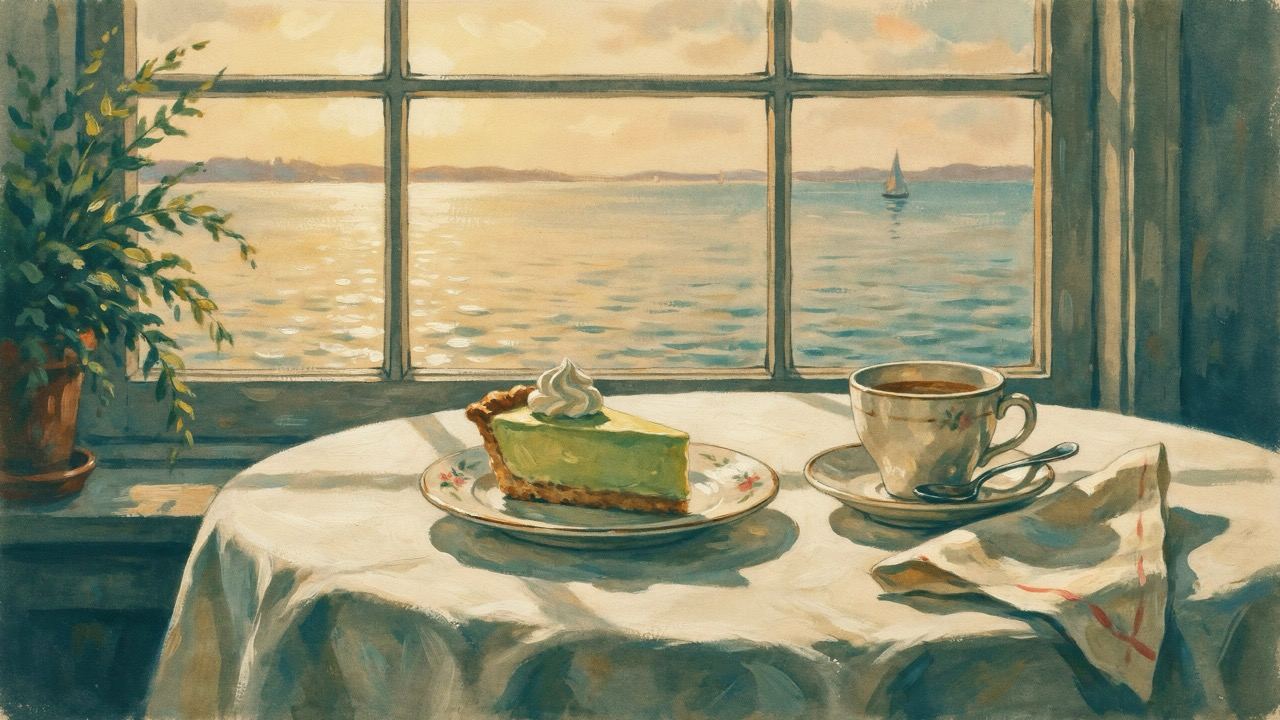
The key lime pie, when it arrived, was very good. Generous slice. The crust had been blind-baked, which almost nobody bothered to do anymore, and the filling had the right balance of tart and sweet, the kind that required confidence to get right. The Flamingo Club kitchen, {{RECIPIENT_NAME}} was pleased to note, was sure of itself.
{{SHE_CAP}} ate it slowly and watched the room settle into its new arrangement.
Reinhold had spoken privately with Victoria before leaving. The piece itself had never been in question. Whatever Reinhold had doubted over the preceding days, it was never the sapphires, never the platinum, never the craftsmanship. The bracelet was exactly what it appeared to be. Only the story it had been traveling inside was wrong. His career would survive. Forty years was a long time, and people in this world had short institutional memory for scandals that didn’t involve money or matrimony. He had panicked. He had made it worse. The thing that had revealed the secret was the bracelet itself, which had been waiting patiently inside its own clasp for thirty-something years.
Edward was at the bar, smiling in the way people smiled when something they had been holding at a slight distance had finally arrived and turned out to be manageable.
Constance Fairweather was on her phone, comparing notes with someone about dental practices on South County Road. Whatever she had hoped to accomplish at this luncheon, she had found something more interesting.
Gerald Whitmore was already onto the next thing. But even he had paused, briefly, to write something in his notebook with the expression he reserved for important donor information. Dorothy, apparently, had made the list.
❦
Paulette Marsh stopped by {{RECIPIENT_NAME}}’s table on her way out.
“Well,” she said. “That was considerably more interesting than Harriet Fullerton.”
“Most things are,” {{RECIPIENT_NAME}} said.
“The bracelet is still beautiful, you know. Whatever it is.”
“I know,” {{RECIPIENT_NAME}} said. Paulette nodded, satisfied, and left.
Victoria was at the center table, where she had been all afternoon. She was talking again, and the people around her were listening with the engaged interest of people who understood that the story had changed and were curious to see what shape it would take now. Victoria was good at stories. She would find the shape. It would probably be a good one. It might even be true.
❦
Somewhere in Palm Beach, possibly, was a woman named Dorothy who had spent twenty years at a dental practice near the bridge, doing something well enough that her colleagues had given her a platinum and sapphire bracelet to mark the occasion. Who had then, at some point, parted with it. And who had not thought about it for a very long time.
Five people were currently trying to find her. Gerald Whitmore had her on a list.
{{RECIPIENT_NAME}} finished {{HER_P}} pie, set down {{HER_P}} fork, and looked out the east window at the afternoon light on the water, which was gold and flat and entirely indifferent to bracelets.
Then {{SHE}} asked for the check.
The Flamingo Club
Palm Beach
Member{{RECIPIENT_NAME}}
TableEast window
Preservation Luncheon1
Consomméincl.
Key lime pieincl.
Coffeeincl.
Charge to member account
{{RECIPIENT_NAME}}
❦
WHAT YOU KNEW, IN THE END
Reinhold Pfeiffer repaired the bracelet’s clasp and discovered an inscription he had never seen before.
The inscription read: Congratulations Dorothy. Twenty Wonderful Years. Sunshine Dental Associates. 1987.
The Amarante Collection’s aristocratic history was a story, not a documented fact.
Reinhold panicked. He took the bracelet to conceal the inscription and protect his professional reputation.
Victoria’s husband Edward had sensed for some time that something was wrong. He did not know what.
Constance Fairweather had suspected the bracelet’s provenance for years. She had been waiting, quietly, for someone to look closely.
Thomas, the club staff member, recognized the bracelet’s style because his grandmother had received one just like it, as a twenty-year gift from her employer.
None of this changed what the bracelet was. It was still beautiful. It still caught the light.
Dorothy is out there somewhere. Gerald Whitmore has her on a list.